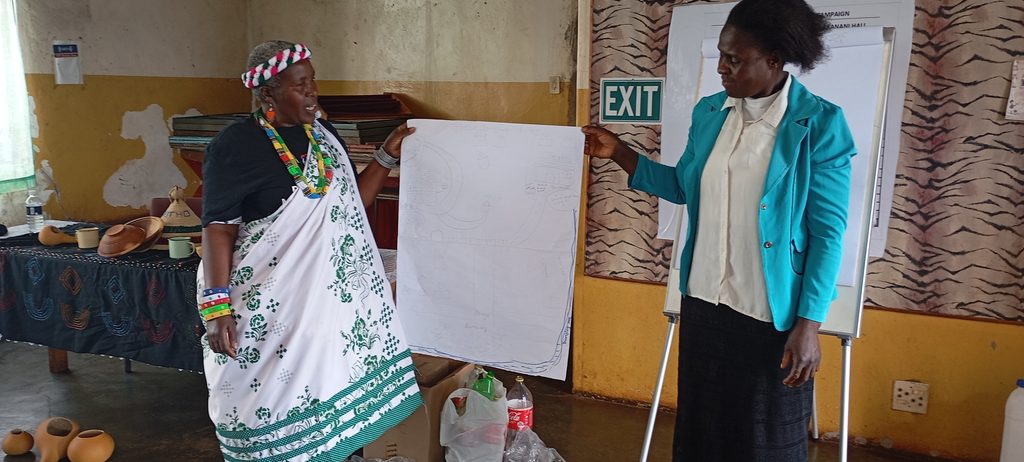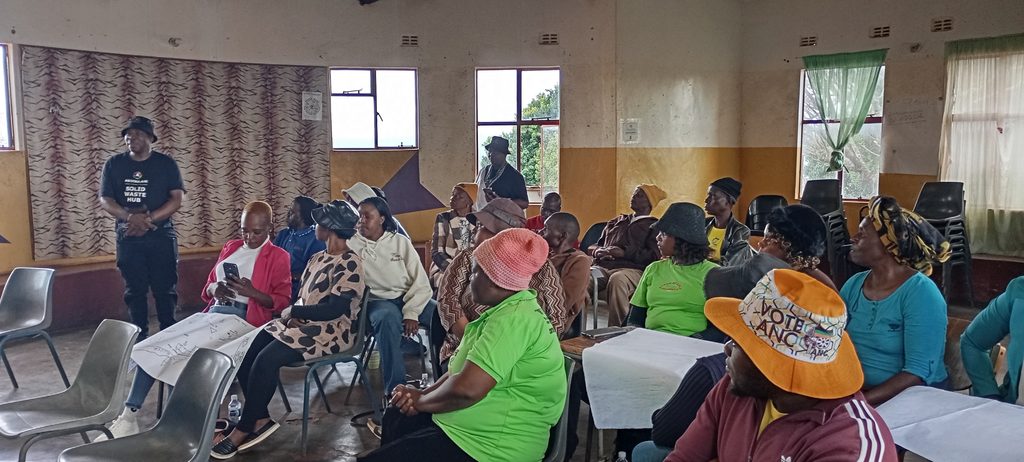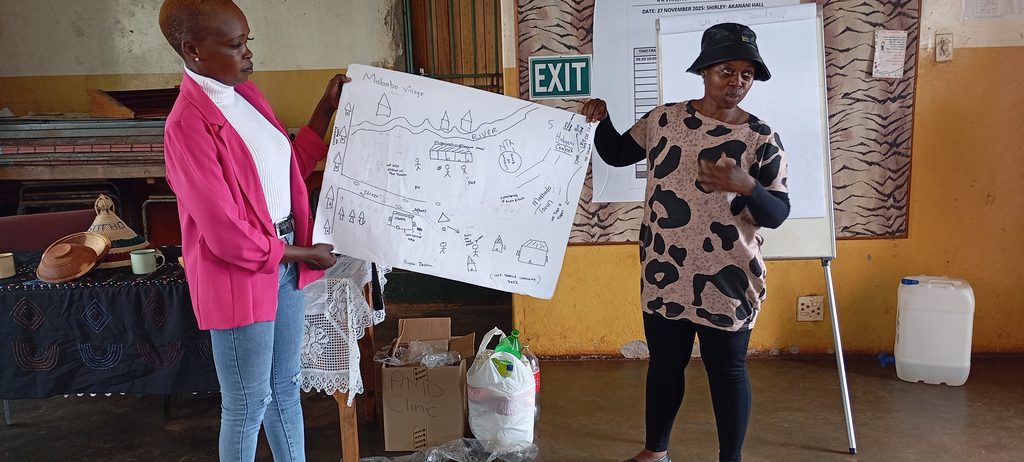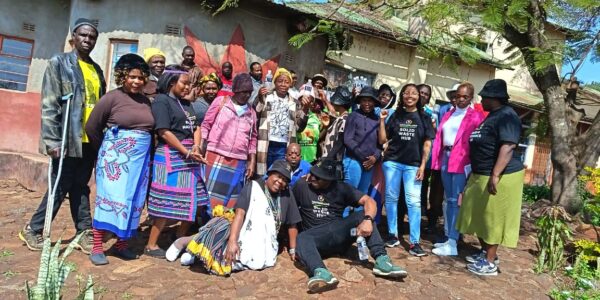
On the 21st of September 2026, Vumbanani for Peacebuilding in collaboration with Asivikelane held a waste management workshop at Akanani Centre.
Asivikelane conducted a community waste management workshop aimed at increasing awareness and understanding of responsible waste management, environmental protection, recycling and the opportunities presented by a circular green economy.
The workshop was organised in response to persistent waste management and service delivery challenges affecting communities in Elim, including limited waste collection services, illegal dumping, inadequate disposal practices and the accumulation of waste in public and residential areas. These challenges not only affect the cleanliness and appearance of communities but can also contribute to environmental degradation, blocked drainage systems, health risks and reduced quality of life.
The workshop provided an opportunity for community members to learn practical approaches to waste reduction, separation, reuse, recycling and responsible disposal. It also encouraged participants to view waste not simply as something to be discarded, but as a resource that can create environmental, social and economic opportunities.
Objectives
The main objectives of the workshop were to:
- Increase community awareness of responsible waste management practices.
- Educate participants about waste separation, recycling, reuse and reduction.
- Highlight the environmental and health consequences of poor waste management.
- Encourage communities to take greater responsibility for their local environment.
- Introduce the concept of a circular green economy and its relevance to Elim.
- Identify opportunities for income generation through recycling and other green activities.
- Encourage partnerships between communities, businesses, schools, local authorities and civil society organisations.
- Promote sustainable community-led solutions to waste management challenges.
Key Issues Discussed
The workshop addressed several important waste management issues affecting the community. Participants discussed the challenges associated with indiscriminate dumping, limited waste collection, burning of waste and the lack of adequate waste separation at household and community level.
Particular attention was given to the need for households, schools, businesses and community organisations to separate recyclable materials such as plastic, paper, cardboard, glass and metal from general waste.
The workshop also emphasised that waste management is a shared responsibility. While municipalities have important responsibilities in providing waste management services, communities can contribute significantly through responsible disposal practices, environmental education, recycling initiatives and community monitoring.
Lessons Learnt
The workshop generated several important lessons.
1 Waste is also a resource
One of the key lessons was that many materials considered to be waste still have economic value. Plastic, cardboard, paper, glass and metal can be collected, sorted and recycled. This creates an opportunity for communities to move from a disposal-based approach towards a resource-recovery approach.
2 Waste management requires community participation
Participants recognised that government alone cannot solve all waste management challenges. Sustainable results require active participation from households, community organisations, schools, businesses, traditional leadership structures and other stakeholders.
3 Prevention is better than disposal
Participants learnt that reducing the amount of waste generated in the first place is more sustainable than relying entirely on disposal. Reusing materials, avoiding unnecessary packaging and choosing reusable products can significantly reduce waste.
4 Environmental problems can create economic opportunities
The workshop highlighted the potential for recycling and other green activities to support livelihoods. Collection, sorting, recycling, composting, upcycling and the production of environmentally friendly products can potentially create employment and small-business opportunities, particularly for unemployed youth and women.
5 Environmental education must be continuous
A once-off workshop is not sufficient to change behaviour. Continued awareness campaigns, school programmes, community clean-ups, demonstrations and practical recycling activities are required to sustain behavioural change.
6 Partnerships are essential
The workshop demonstrated the importance of partnerships between VFP, the municipality, businesses, schools, waste recyclers, community structures, traditional leaders and potential funders. Such partnerships can provide technical support, equipment, collection services, training and markets for recyclable materials.
Advantages to the Community
The workshop has the potential to contribute to several positive outcomes within the community.
Environmental benefits
Improved waste management can reduce illegal dumping, littering and uncontrolled burning. It can also contribute to cleaner public spaces, reduced pollution and better protection of local water sources and ecosystems.
Health benefits
Proper waste disposal can reduce exposure to hazardous materials, pests and other health risks associated with unmanaged waste. Cleaner communities also contribute to healthier and safer living environments.
Economic benefits
Recycling and other green enterprises can create opportunities for income generation. Community members can potentially earn income from collecting and supplying recyclable materials, while entrepreneurs can develop businesses around recycling, composting, upcycling and environmentally friendly products.
Social benefits
Community-based environmental activities can strengthen cooperation and social responsibility. Clean-up campaigns, recycling initiatives and environmental clubs can bring residents together around a common objective.
Youth empowerment
The circular green economy provides opportunities for young people to acquire practical skills and participate in emerging green enterprises. Youth can be trained in recycling, waste sorting, environmental education, entrepreneurship and digital marketing of green products.
Improved community participation
The workshop strengthens VFP’s broader civic education and public participation work by encouraging community members to participate in identifying local problems and developing practical solutions.
Moving Towards a Circular Green Economy
The workshop demonstrated that Elim can gradually move towards a circular green economy by changing the way waste is viewed and managed.
A circular economy seeks to keep materials and products in use for as long as possible through reduction, reuse, repair, refurbishment, recycling and recovery. Instead of the traditional model of “take, make, use and dispose,” communities can work towards a model where materials are continuously recovered and reused.
VFP can support this transition through the establishment of a structured community recycling programme.
Proposed actions include:
1. Establish community collection points
Identify strategic locations where households, schools and businesses can bring recyclable materials.
2. Introduce waste separation at source
Promote the separation of recyclable materials from general waste at household, school and business level.
3. Establish school recycling programmes
Work with schools to establish environmental clubs, recycling competitions, awareness campaigns and collection systems.
4. Train community volunteers
Equip volunteers with knowledge and practical skills in waste management, environmental education and recycling.
5. Develop partnerships with recyclers
Establish relationships with recycling companies and waste recovery facilities that can purchase or receive collected recyclable materials.
6. Promote green entrepreneurship
Train interested community members, particularly young people and women, to develop small businesses based on recycling, composting, upcycling and other green activities.
7. Introduce community clean-up campaigns
Organise regular clean-up activities linked to environmental education and waste separation.
8. Promote composting
Organic household and garden waste can be diverted from disposal through household and community composting initiatives, providing useful compost for gardens and agricultural activities.
9. Develop a community environmental awareness campaign
Use community meetings, schools, social media, posters and door-to-door activities to continuously promote responsible waste management.
10. Establish a monitoring system
VFP should maintain records of participating households, schools and businesses, quantities of recyclable materials collected, clean-up activities conducted and the number of people trained.
Recommendations
Based on the lessons from the workshop, the following recommendations are proposed:
- Waste management education should continue beyond the workshop through regular community awareness activities.
- VFP should develop a structured and ongoing community recycling programme.
- Stronger partnerships should be established with Makhado Municipality and other relevant stakeholders.
- Recycling companies should be approached to establish reliable markets and collection arrangements for recyclable materials.
- Schools should be encouraged to become environmental education and recycling hubs.
- Youth and women should be prioritised for training in green entrepreneurship and recycling-related livelihood opportunities.
- Community collection points should be established in accessible areas.
- Donor and private-sector funding should be mobilised to support recycling equipment, protective clothing, collection containers, transportation, training and awareness activities.
- The programme should develop measurable indicators to demonstrate its environmental, social and economic impact.
- The circular economy approach should be integrated into VFP’s wider community development, civic education and public participation programmes.
Conclusion
The waste management workshop was an important step towards strengthening environmental awareness and promoting responsible waste management in the Elim community. It provided participants with practical knowledge about reducing, reusing, separating and recycling waste while demonstrating that waste management can also contribute to livelihoods and local economic development.
The workshop further demonstrated that environmental challenges such as illegal dumping, inadequate waste collection and poor disposal practices require collective action. Government, civil society, businesses, schools and communities all have an important role to play.
Going forward, VFP will seek to build on the knowledge generated through the workshop by promoting a community-led circular green economy. This will involve strengthening recycling systems, developing green skills, supporting environmental entrepreneurship, establishing partnerships and continuously educating the community.
The ultimate goal is to move the community from a culture of waste disposal to waste recovery, reuse and value creation, while contributing to a cleaner, healthier, more resilient and economically empowered Elim community.
Prepared by: Tendai Chandigere
Vumbanani for Peacebuilding (VFP)
Promoting Human Rights, Social Cohesion, Development, Care and Protection of Vulnerable and Marginalised Populations